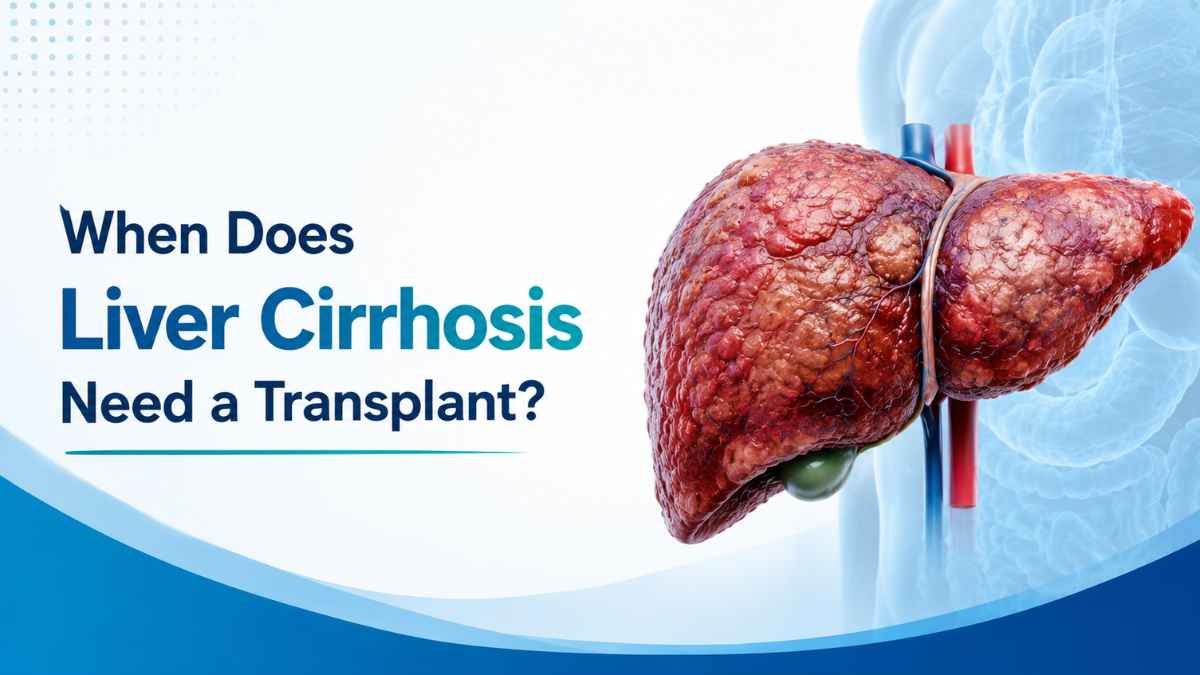
A diagnosis of liver cirrhosis is frightening — but it does not automatically mean a transplant is needed tomorrow. Many people live with well-managed cirrhosis for years. The key is knowing when cirrhosis has progressed to the point that a transplant becomes the best option — because timing can save a life.
What is cirrhosis?
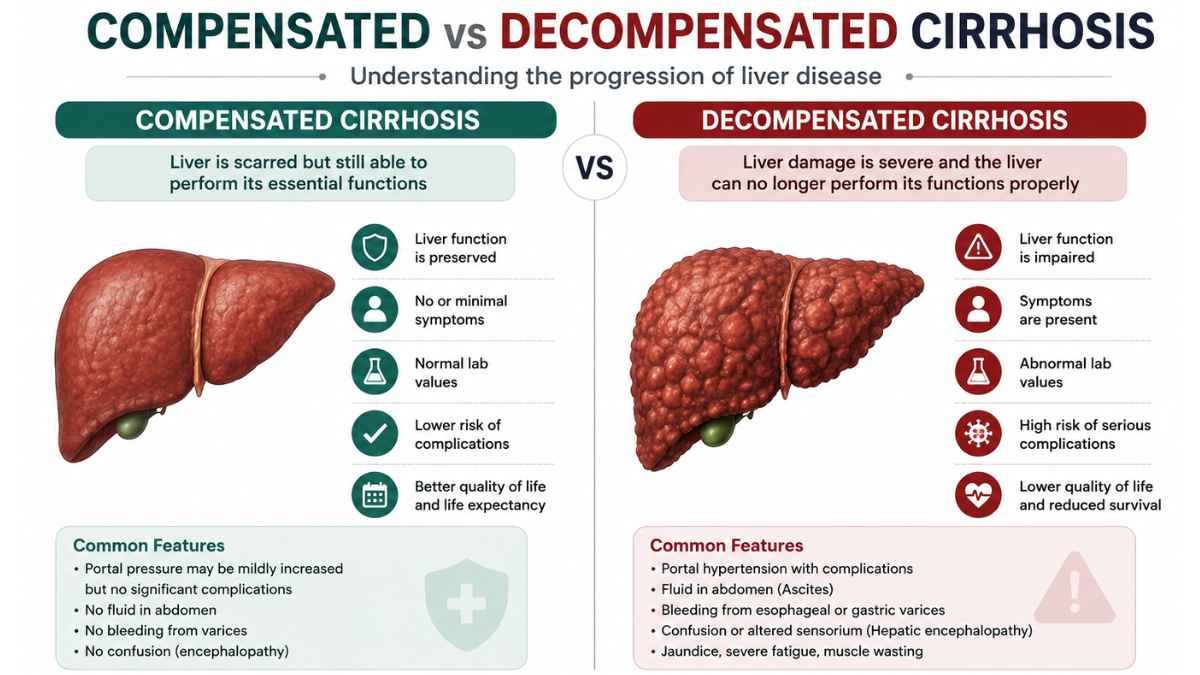
Cirrhosis is advanced scarring of the liver, usually caused by long-standing hepatitis B or C, alcohol, or fatty liver disease (NASH). Early (“compensated”) cirrhosis may cause few symptoms. The concern is when it becomes “decompensated” — meaning the liver can no longer keep up with the body's needs.
Warning signs that cirrhosis may need a transplant
A specialist opinion is strongly advised if a person with cirrhosis develops any of these:
- Persistent or worsening jaundice (yellow eyes/skin)
- Fluid in the abdomen (ascites) or swelling of the legs
- Confusion or drowsiness (hepatic encephalopathy)
- Vomiting blood or black stools (variceal bleeding)
- Repeated infections or worsening kidney function
Why timing matters so much
Referring a patient to a transplant surgeon early — rather than waiting until they are critically ill — gives more options and a smoother path. A transplant assessment does not mean surgery will happen immediately; it means the family gets clarity and a plan while there is still time to prepare.
Is a transplant the only option?
Not always. Some complications of cirrhosis can be managed medically for a time. But when the liver is failing, a transplant is often the only definitive cure. A proper evaluation is the only way to know where a patient stands.
Medical disclaimer: This article is for general education and awareness only and is not a substitute for professional medical advice. Please consult a qualified doctor about your individual condition. No specific outcome is guaranteed.