Gutwell Clinics, Gurugram OPD: Mon, Wed, Fri & Sat, 4:00 PM – 6:00 PM
Outstation & video consults available WhatsApp +91 90000 00000
Home  /  Liver Transplant  /  Deceased Donor (DDLT)
Deceased Donor (DDLT)

Deceased Donor Liver Transplant (DDLT) in Gurugram

A whole liver from a brain-death (cadaveric) donor, allocated fairly through the government deceased-donor programme.

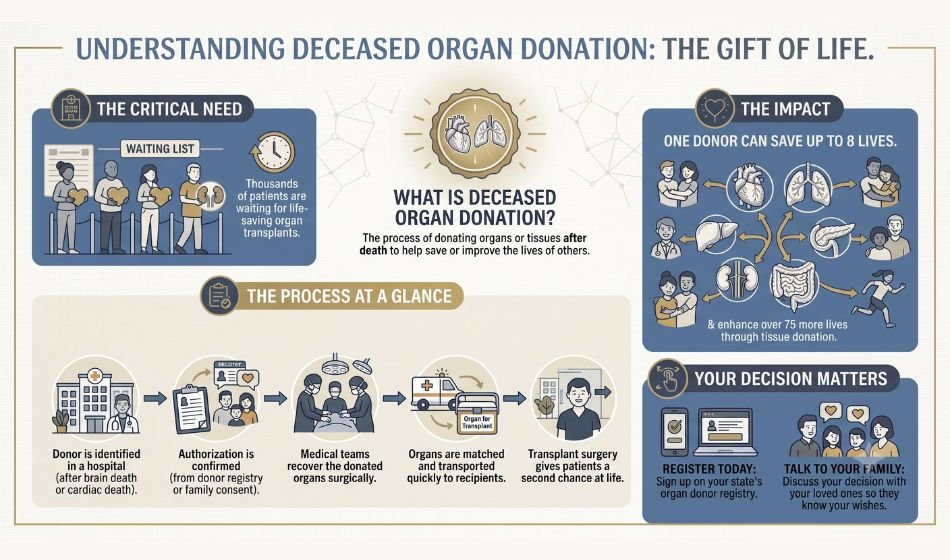
A deceased donor liver transplant (DDLT) — also called a cadaveric transplant — uses a liver donated after brain death, through the official deceased-donor organ allocation programme. It is a profound act of generosity that gives another person a second chance at life.

How deceased-donor allocation works

Patients who need a transplant are registered on the state / national waiting list. When a deceased-donor liver becomes available, it is allocated according to medical urgency, blood group and waiting time, following a transparent, government-regulated system. No organ can be bought, sold or arranged privately.
Legally regulated: Deceased-donor allocation is controlled by government bodies (such as NOTTO / state organ & tissue transplant organisations). Dr. Yadav's team guides eligible patients on registering on the official waiting list — it does not, and cannot, influence or bypass allocation.

DDLT vs LDLT — which is right?

DDLT avoids the need for a living donor, but depends on organ availability and waiting time. LDLT can be planned sooner because it uses a willing near-relative donor. For many patients, both options are considered together, and Dr. Yadav helps the family choose the safest, most timely path.

Registering & preparing

  • Complete medical evaluation to confirm transplant suitability
  • Registration on the official deceased-donor waiting list
  • Staying medically optimised and reachable, so you are ready when an organ is allocated
Answers for families

Questions families ask

It is a transplant using a liver donated after brain death, allocated through the government's regulated deceased-donor programme based on medical urgency, blood group and waiting time.

Waiting time varies and cannot be predicted precisely — it depends on organ availability, your blood group and medical urgency. Many patients are evaluated for a living donor option in parallel to avoid long waits.

No. Deceased-donor organs are allocated only through the official, transparent government system. Organs can never be bought, sold or privately arranged. The team only helps eligible patients register correctly.

Yes. Donation after brain death is legal, ethical and regulated under Indian law, and is one of the most generous gifts a family can give. Awareness of deceased donation helps save many lives.

Talk to Dr. Yadav about your options

Every liver is different. Get a personalised opinion after a proper evaluation — in person or over video.

Chat on WhatsApp Call +91 90000 00000
Call WhatsApp Book OPD